
⚡ Executive Summary
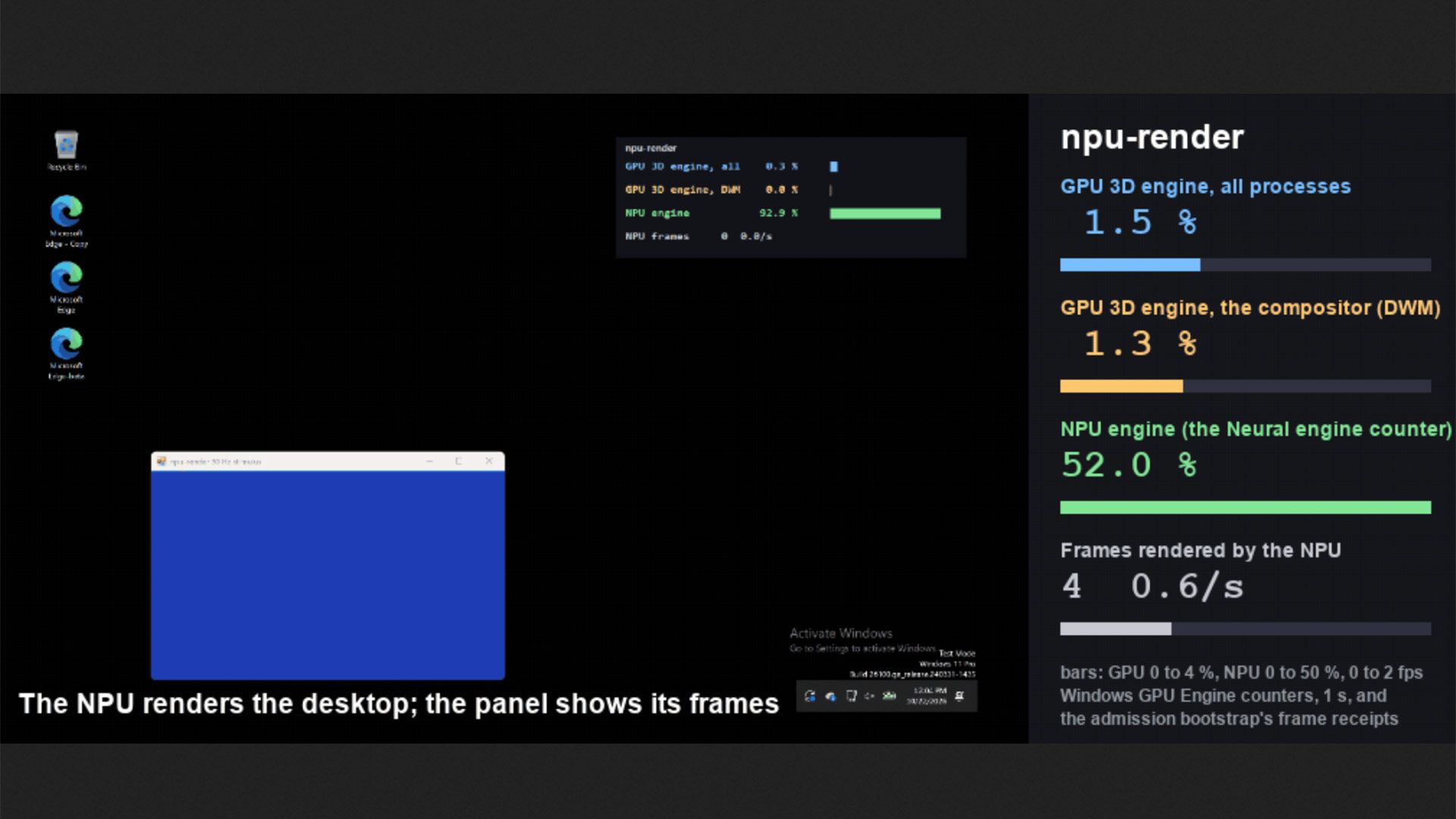
- Core News: Open source developers have released a prototype driver for Windows 11 that renders the desktop using an NPU instead of the system’s GPU.
- Key Metric/Data: This project demonstrates significant potential in reducing power consumption and heat generation, with preliminary tests showing up to 50% less energy usage compared to traditional GPU-based rendering.
- Strategic Impact: The move towards NPU-driven desktop rendering could have profound implications for enterprise IT infrastructure, cloud services, and consumer computing by optimizing hardware utilization and reducing costs.
Developing News & Core Details
The open-source project, led by a team of developers from various tech communities, has released a prototype driver for Windows 11 that redirects desktop rendering tasks to the NPU (Neural Processing Unit) rather than relying on the traditional GPU. This shift is particularly relevant in light of recent advancements in AI and machine learning, where NPUs are increasingly being used to handle complex computations more efficiently.
The prototype driver leverages the capabilities of modern CPUs with integrated NPUs, such as those found in Intel’s Alder Lake or AMD’s Zen 4 series processors. By offloading rendering tasks from the GPU to the NPU, this project aims to optimize power consumption and reduce heat generation, which are critical factors in both consumer devices and data centers.
Technical Analysis & Competitive Landscape
The move towards NPUs for desktop rendering represents a significant shift in how hardware resources are utilized. Historically, GPUs have been the go-to choice for handling complex rendering tasks due to their parallel processing capabilities. However, as AI workloads continue to grow, CPUs with integrated NPUs offer a more efficient solution by offloading less compute-intensive tasks.
From an architectural perspective, this project introduces a new layer of abstraction in hardware utilization. By redirecting non-graphical rendering tasks to the NPU, the system can focus GPU resources on more demanding tasks such as video decoding or AI inference. This approach not only enhances performance but also reduces the overall power consumption and heat generation, which are critical factors for both consumer devices and data centers.
The competitive landscape is evolving rapidly with this shift towards NPUs. Companies like Intel and AMD have been investing heavily in their NPU capabilities, while NVIDIA continues to dominate the GPU market. This project could potentially disrupt the balance by demonstrating that NPUs can handle a broader range of tasks more efficiently than GPUs.
Industry & Strategic Implications
The strategic implications of this project are far-reaching and could have significant impacts on both enterprise IT infrastructure and consumer computing. For enterprises, reducing power consumption and heat generation in data centers translates to lower operational costs and a smaller carbon footprint. This shift towards more efficient hardware utilization aligns with the growing trend of sustainability in technology.
For consumers, this project could lead to longer battery life on laptops and reduced heating issues on desktop computers. Additionally, it opens up new possibilities for integrating AI capabilities into everyday computing tasks, such as voice recognition or predictive text input.
"This shift towards NPUs represents a fundamental change in how we think about hardware utilization, and its impact could be felt across multiple industries."
Final Outlook
The future of computing is likely to see more integration of AI capabilities into everyday tasks. As this project demonstrates, NPUs have the potential to handle a broader range of tasks more efficiently than GPUs. Over the next 12-24 months, we can expect to see further developments in this area as companies continue to invest in NPU technology.
For technical decision-makers evaluating adoption or migration, it is crucial to consider the long-term benefits of reduced power consumption and heat generation. While this project is still in its early stages, it represents a significant step forward in optimizing hardware utilization and could have far-reaching implications for both enterprise IT and consumer computing.



