
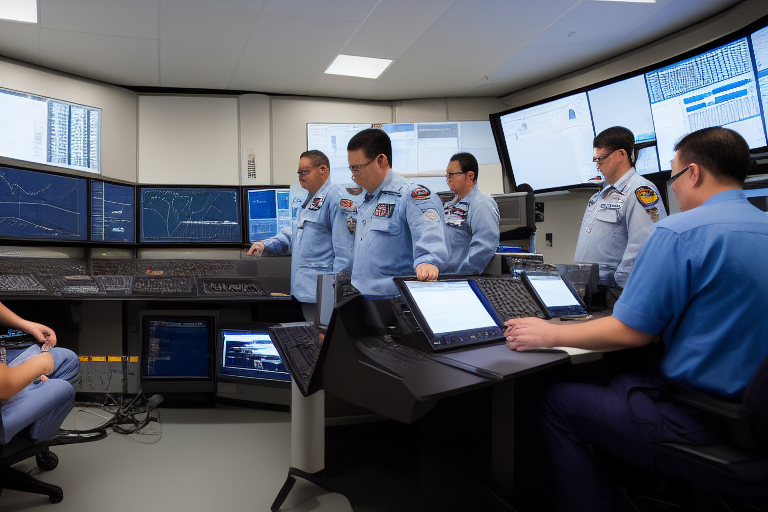
⚡ Executive Summary
- Core News: Recent operational friction and service modifications involving SpaceX’s Starshield network in Ukraine have introduced systemic risks to Elon Musk’s broader defense portfolio.
- Key Metric/Data: Billions of dollars in Pentagon and allied defense contracts hinge on Starshield’s unassailable reliability, low-latency encryption, and absolute geopolitical compliance.
- Strategic Impact: The incident forces traditional defense primes and allied militaries to re-evaluate single-vendor satellite dependencies, opening the door for multi-orbit competitors.
Developing News & Core Details
The strategic friction surrounding SpaceX’s Starshield architecture in Ukraine has crystallized into a critical inflection point for commercial space enterprises engaging in sovereign warfare. Initially deployed to shore up critical communications amidst terrestrial infrastructure collapse, Starshield—the hardened, military-grade variant of the commercial Starlink constellation—has faced escalating operational bottlenecks, policy adjustments, and friction points regarding operational control.
The modifications implemented to the Starshield service highlight a fundamental tension: the dichotomy between rapid, agile commercial iteration and the rigid, sovereignty-bound requirements of global military command and control. As defense planners scrutinize how these service changes impacted frontline maneuvers, questions are no longer merely tactical; they strike at the heart of enterprise scalability, sovereign trust, and the viability of relying on a single commercial entity for foundational military communications.
Technical Analysis & Competitive Landscape
From an engineering perspective, Starshield represents a masterclass in leveraging commercial-off-the-shelf (COTS) paradigms for defense applications. By utilizing low-Earth orbit (LEO) constellations equipped with inter-satellite laser links, Starshield bypasses terrestrial backhaul bottlenecks, offering resilient, high-bandwidth data transmission encrypted to military specifications.
However, the underlying architecture exposes specific vulnerabilities. Unlike traditional geostationary (GEO) defense satellites engineered under strict government oversight with bespoke hardware redundancies, Starshield relies on mass-produced LEO satellites. While this allows for rapid constellation replenishment, it also ties service delivery to centralized software updates, proprietary ground station networks, and corporate policy decisions.
Competitors in the defense-space ecosystem—including established primes like Lockheed Martin and Northrop Grumman, alongside agile LEO challengers like OneWeb (Eutelsat) and Kuiper—are closely watching these developments. The core competitive takeaway is clear: while SpaceX currently holds an insurmountable cost and deployment advantage, militaries demand absolute predictability. Any perceived unreliability in service execution invites aggressive alternative procurement strategies from rival contractors.
Industry & Strategic Implications
The ramifications of the Starshield service adjustments extend far beyond the theater in Ukraine. For enterprise IT leaders, defense contractors, and procurement officers at the Department of Defense, the situation serves as a stark warning regarding vendor lock-in within critical national security infrastructure.
Diversification is rapidly emerging as the primary defense-tech mandate. Future procurement frameworks are expected to mandate multi-constellation interoperability, ensuring that military end-users can seamlessly transition between commercial providers (such as SpaceX, Kuiper, and Telesat) and sovereign military payloads without catastrophic service degradation. This shift will likely spur massive investments in software-defined user terminals capable of switching across disparate frequencies and orbital regimes dynamically.
“The intersection of commercial LEO constellations and modern geopolitical warfare has permanently altered defense procurement; absolute technological superiority is now inextricably linked to sovereign trust and uninterrupted execution.”
Final Outlook
SpaceX’s long-term dominance in the military space market depends heavily on its ability to navigate the complex diplomatic and operational demands of global superpowers. While the company’s engineering prowess remains unmatched, the Starshield challenges in Ukraine demonstrate that technological excellence alone cannot insulate a commercial entity from the realities of geopolitical friction.
Over the next decade, we anticipate a regulatory and contractual tightening where commercial space providers must institute clearer governance structures, guaranteed service levels independent of corporate leadership whims, and deeper integration with allied defense infrastructure. Failure to adapt to these stringent expectations could see SpaceX transition from an indispensable defense partner to a cautionary tale of commercial overextension in the theater of modern warfare.
⚡ Featured Enterprise & AI Infrastructure Picks
Building high-throughput AI pipelines or upgrading your workstation? Explore our curated cloud hosting, GPU workstations, and enterprise software stack.



