
⚡ Executive Summary
- Core News: The Senate Commerce Committee, led by Senator Ted Cruz, unanimously advanced Donald Trump’s Federal Communications Commission (FCC) nominee in a 15-0 vote after Democratic members staged a coordinated boycott.
- Key Metric/Data: A 15-0 committee vote secured strictly along party lines in terms of physical presence, with absent Democrats attempting to deny a working quorum over alleged misrepresentations regarding prior media lobbying work.
- Strategic Impact: The partisan escalation signals a fiercely contested path ahead for tech and telecommunications policy, directly impacting spectrum auctions, media ownership rules, and net neutrality frameworks.
Developing News & Core Details
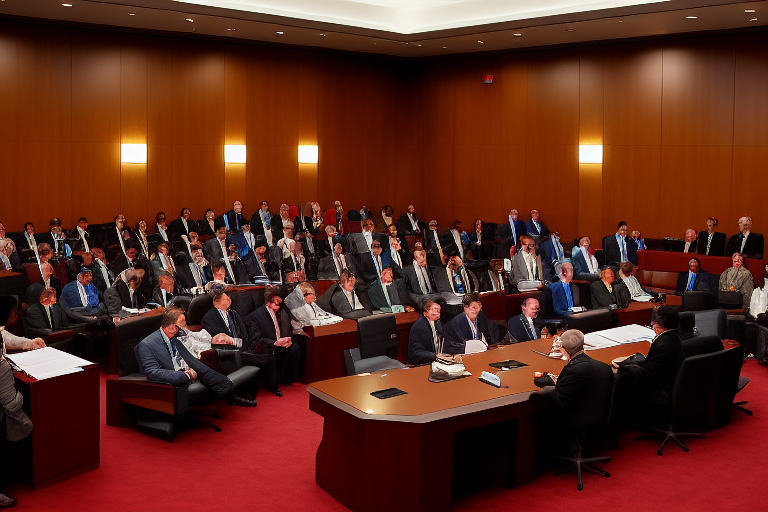
The Senate Commerce Committee hearing surrounding Donald Trump’s designated Federal Communications Commission (FCC) nominee deteriorated into a high-stakes partisan standoff as Republican lawmakers, spearheaded by Senator Ted Cruz, advanced the nomination via a 15-0 vote. Democratic members of the committee executed a strategic boycott in a concerted effort to break the committee’s quorum and halt the nomination process entirely.
The core catalyst for the Democratic walkout centers on allegations that the nominee misrepresented their professional background during vetting procedures, specifically concerning past involvement in contentious media policy and broadcasting issues. Democratic leaders argued that these omissions constituted a breach of trust, raising fundamental transparency concerns regarding the nominee’s capability to regulate the telecommunications sector impartially. Conversely, Republican leadership dismissed the boycott as a transparent obstructionist tactic, pushing forward to ensure the agency’s leadership transition faces no further administrative roadblocks.
Technical Analysis & Competitive Landscape
The FCC sits at the intersection of critical digital infrastructure, managing everything from wireless spectrum allocation and 5G/6G deployment rollouts to broadband expansion initiatives and cybersecurity standards for telecommunications networks. Leadership changes at the Commission inevitably alter the regulatory posture governing major telecom incumbents, satellite internet providers, and enterprise-grade cloud infrastructure players.
From an architectural and market perspective, a conservative-leaning FCC majority historically favors deregulation, easing media cross-ownership caps, and dismantling heavy-handed utility-style internet regulations such as net neutrality. This prospective shift directly impacts how telecommunications giants design their network monetization strategies, deploy capital expenditures for rural broadband, and negotiate spectrum leasing agreements. For enterprise technology firms, regulatory predictability—or the lack thereof—substantially influences long-term infrastructure investments and cross-border data transmission protocols.
Industry & Strategic Implications
The bitter partisan division witnessed in the Senate Commerce Committee portends a deeply polarized regulatory environment for the technology and media sectors. As the nomination moves to the full Senate, industry stakeholders must brace for intense legislative battles that reflect broader ideological fractures over digital censorship, content moderation, and broadband equity.
For investors and corporate strategists, an FCC operating under conservative leadership typically translates to fewer compliance hurdles for mergers and acquisitions within the media and telecommunications spheres. However, the contentious nature of this confirmation process guarantees that any policy actions taken by the incoming commissioner will face relentless judicial scrutiny and political pushback from consumer advocacy groups and congressional Democrats.
“Regulatory battles over spectrum management and digital oversight are no longer merely administrative affairs; they have evolved into frontline skirmishes defining the future architecture of the global digital economy.”
Final Outlook
As the nomination transitions from committee approval to the full Senate floor, the bitter fallout from the Democratic boycott sets a hostile precedent for future tech policy debates. The incoming FCC leadership will inherit a deeply fractured agency tasked with navigating complex technological frontiers, including artificial intelligence integration in telecommunications, satellite constellation congestion, and universal service fund reform.
Ultimately, the smooth technical execution of the committee vote masks a volatile operational environment ahead. Telecommunications executives and enterprise IT leaders must factor heightened regulatory uncertainty and protracted legal challenges into their strategic roadmaps for the foreseeable future.
🚀 Custom Web Hosting & AI Automation Solutions
Need enterprise-grade web hosting, custom WordPress architecture, or automated workflow deployment for your business?



