
⚡ Executive Summary
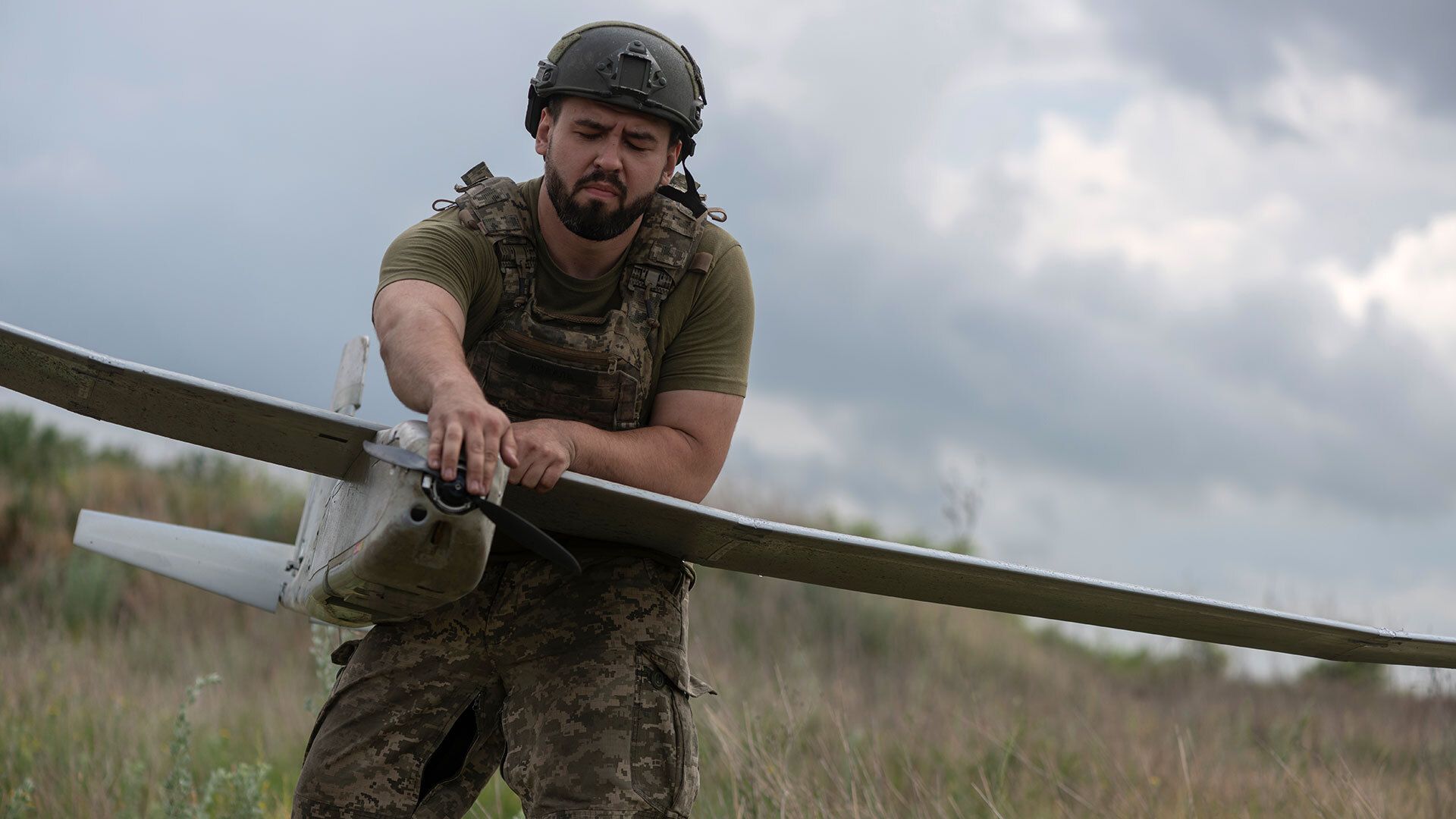
- Core News: Ukraine has successfully reactivated a fleet of over 500 US-made Puma AE reconnaissance drones that were previously grounded by Russian electromagnetic warfare (EW) interference, utilizing newly developed homegrown anti-jamming technology.
- Key Metric/Data: The operation involves restoring the operational status of more than 500 units of the AeroVironment Puma AE, a high-endurance tactical UAV previously rendered non-functional by enemy electronic attacks.
- Strategic Impact: This development signifies a critical evolution in asymmetric warfare, demonstrating how indigenous innovation can neutralize sophisticated EW threats and extend the effective range of Western-supplied assets without relying solely on hardware replacements.
Developing News & Core Details
The recent resurgence of Ukraine’s aerial reconnaissance capabilities centers on a specific technical victory: the recovery of the Puma AE fleet. These unmanned aircraft systems (UAS), manufactured by AeroVironment, were among the most advanced tactical drones delivered to Kyiv under international aid packages. Their primary role involves high-resolution imagery collection and real-time intelligence sharing for artillery correction and battlefield mapping.
However, their operational window was abruptly closed when Russian forces intensified electronic warfare efforts. The Puma AE, while robust, operates on communication links that are susceptible to jamming in contested electromagnetic spectra. As Russian EW units deployed high-power transmitters designed to disrupt the 2.4 GHz and 5.8 GHz bands used by these drones, hundreds of aircraft were forced into a grounded state, effectively blinding Ukrainian command structures.
The turning point arrived with the deployment of “homegrown anti-jamming tech.” This refers to indigenous software-defined radio (SDR) upgrades and adaptive frequency-hopping algorithms developed by Ukrainian engineers. Unlike traditional hardware fixes that require physical replacement of antennas or radios, these solutions involve reconfiguring the drone’s flight controller and communication stack to dynamically evade interference. By analyzing the spectral signature of Russian jammers in real-time, the upgraded Puma AE units can hop frequencies or adjust power levels to maintain a stable data link, effectively “seeing through” the noise floor created by enemy EW.
Technical Analysis & Competitive Landscape
The reactivation of the Puma AE fleet highlights a fundamental shift in the architecture of modern tactical drones. Historically, drone resilience was achieved through redundancy—carrying multiple radios or using diverse frequency bands. However, as electronic warfare becomes more sophisticated and pervasive, static configurations are easily neutralized.
Ukraine’s solution represents a move toward cognitive radio principles in the tactical domain. Cognitive radios can sense their environment and adapt their transmission parameters to avoid interference. By integrating this capability into the Puma AE, Ukrainian developers have transformed a standard commercial-off-the-shelf (COTS) platform into a resilient node capable of operating in high-threat environments.
In terms of competitive landscape, this development places Ukraine ahead of several peer nations that rely on similar Western platforms but lack equivalent indigenous EW countermeasures. For instance, while the US military uses Puma drones extensively, they often pair them with dedicated airborne jammers or ground-based EW suites to protect their own assets. Ukraine’s ability to retrofit these systems suggests a high degree of software agility and rapid prototyping capability.
From an architectural standpoint, this upgrade also implies improvements in the drone’s onboard processing power. Adaptive frequency hopping requires significant computational resources to analyze the spectrum and execute jumps without disrupting the video feed or telemetry stream. This suggests that the Puma AE fleet may have been upgraded with more powerful flight controllers capable of handling these complex algorithms, effectively future-proofing the hardware against evolving EW threats.
Industry & Strategic Implications
The broader implications for enterprise IT and defense procurement are profound. The success of this initiative demonstrates that software-defined resilience is becoming as critical as raw hardware performance in contested environments. For enterprise customers deploying drones in logistics, surveying, or security, the lesson is clear: a drone’s value is not just in its sensors but in its ability to maintain connectivity under pressure.
This development also accelerates the trend of modular defense. Instead of waiting for manufacturers like AeroVironment to release new models with built-in anti-jamming features, end-users can now apply patches and upgrades that extend the lifecycle of existing fleets. This reduces dependency on supply chains that may be strained by war or geopolitical friction.
For investors and defense analysts, this signals a growing market for tactical software over hardware. Companies specializing in SDRs, spectrum analysis, and adaptive algorithms are poised to see increased demand as nations seek to maximize the utility of their existing drone inventories without massive capital expenditure on new airframes.
“The reactivation of the Puma AE fleet is not merely a tactical fix; it is a strategic declaration that software agility can overcome hardware limitations in modern warfare. It proves that the battlefield belongs to those who can adapt their systems faster than their adversaries can disrupt them.”
Final Outlook
Looking ahead, the integration of homegrown anti-jamming tech into Western-supplied drones sets a new benchmark for drone warfare. Future iterations of these platforms will likely see even deeper integration with AI-driven spectrum management systems that can predict and evade interference before it disrupts operations.
This evolution also paves the way for hybrid fleets where commercial drones, originally designed for civilian use, are hardened for military-grade resilience through software upgrades. As Ukraine continues to refine these capabilities, other nations will watch closely, potentially accelerating their own R&D into adaptive communication stacks.
In conclusion, the revival of the Puma AE fleet underscores a critical truth in modern defense: hardware provides the foundation, but software provides the endurance. As electronic warfare becomes the dominant threat vector, the ability to adapt and survive within the electromagnetic spectrum will define the next generation of tactical aviation.



