
⚡ Executive Summary
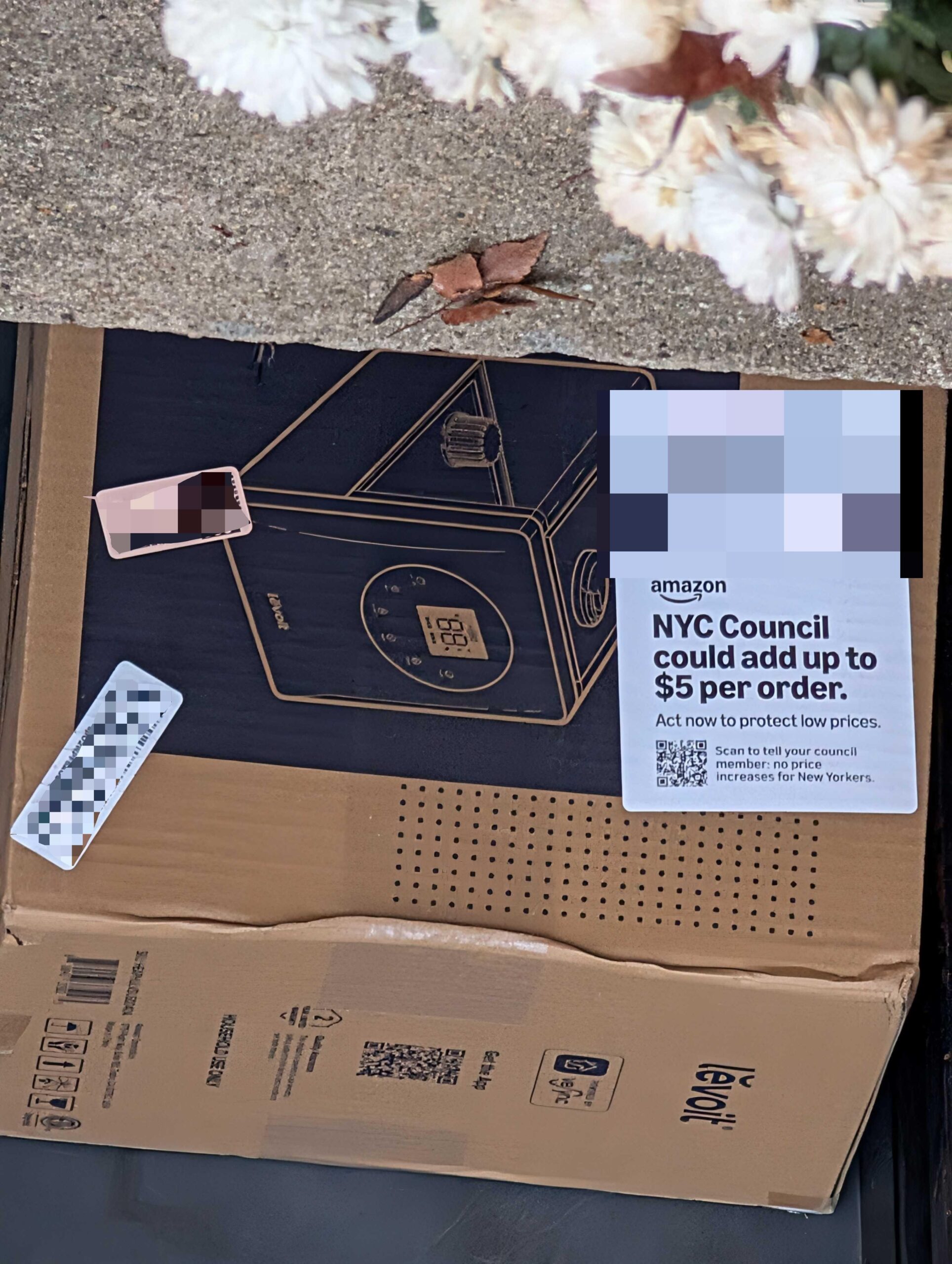
- Core News: Amazon has deployed a digital “surcharge” warning on its mobile app and website, notifying customers that the NYC Council’s proposed Delivery Protection Act could add up to $5 per order. This aggressive move signals a shift from passive lobbying to active consumer pressure tactics.
- Key Metric/Data: The legislation targets third-party logistics arrangements, requiring last-mile firms operating within city limits to be licensed and directly employ their delivery workers, effectively banning the independent contractor model Amazon relies on for its massive fleet.
- Strategic Impact: This conflict represents a critical inflection point in the “gig economy” regulatory landscape. If passed, it forces Amazon to restructure its supply chain or absorb significant operational costs, potentially altering the competitive balance between Amazon and traditional courier services like FedEx and UPS.
Developing News & Core Details
The battle lines have been drawn in New York City. Amazon is no longer content with merely petitioning the NYC Council regarding the Delivery Protection Act; it has decided to weaponize its customer interface against the legislation. Earlier this week, notifications began appearing across Amazon’s mobile app and website, alerting users that the proposed law could result in a surcharge of up to $5 for every order placed.
This notification is not merely an informational update; it is a strategic escalation. The Delivery Protection Act aims to regulate the last-mile delivery sector by mandating that any firm operating a warehouse or logistics hub within New York City must be licensed and directly employ its delivery workers. Currently, Amazon utilizes a hybrid model involving third-party logistics providers (3PLs) and independent contractors for many of its deliveries. The Act would effectively ban these third-party arrangements, forcing a transition to direct employment models similar to those used by traditional carriers or requiring new licensing frameworks that could stifle the agility of current operations.
By displaying this warning, Amazon is leveraging its massive customer base to apply political pressure on the NYC Council. The message implies that if the legislation passes, consumers will bear a direct financial penalty. This “stick” approach complements previous lobbying efforts and highlights how tech giants are increasingly using their user interfaces as tools of policy advocacy.
Technical Analysis & Competitive Landscape
From a technical and architectural perspective, the Delivery Protection Act challenges the scalability model that has defined modern e-commerce logistics. Amazon’s current infrastructure relies heavily on the flexibility of third-party networks to manage peak demand without maintaining a static, fully employed workforce for every delivery route.
The core friction lies in the distinction between “asset-light” and “asset-heavy” operations. Third-party arrangements allow Amazon to scale its delivery network dynamically—hiring contractors during holidays or expanding into new zip codes rapidly. A mandate requiring direct employment introduces rigidities: hiring cycles, benefits administration, and training overheads that increase the marginal cost of each package delivered. For a company like Amazon, where margins are often optimized down to the penny per unit, a $5 surcharge translates to millions in additional costs or lost revenue.
Competitively, this shift could reshape the last-mile landscape. If Amazon is forced to absorb these costs, it may pass them on to consumers through higher shipping fees, eroding its price advantage over competitors like Walmart and Target. Alternatively, Amazon might negotiate a new licensing framework that allows third-party partnerships under stricter oversight, potentially creating a tiered logistics ecosystem where only the most compliant or efficient 3PLs can operate in NYC.
Technologically, this also impacts route optimization algorithms. Current systems are built to integrate seamlessly with contractor APIs and real-time availability feeds from gig platforms. A direct-employment model requires different resource planning, potentially necessitating a more centralized dispatch system that Amazon currently operates at a smaller scale for its own “Amazon Logistics” fleet.
Industry & Strategic Implications
The implications of this conflict extend far beyond New York City. As the first major metropolitan area to aggressively target the gig-economy logistics model, NYC sets a precedent that could ripple across other US cities and even international markets. If Amazon successfully lobbies against or modifies the Act in NYC, it establishes a blueprint for how tech giants can negotiate regulatory overreach.
For enterprise IT and supply chain leaders, this signals a trend toward “regulatory risk” becoming a primary variable in logistics architecture design. Companies may begin to build more modular delivery systems that can adapt to varying local labor laws—perhaps maintaining separate fleets for regulated zones like NYC versus flexible contractor networks for suburban areas.
For investors, the outcome of this battle could impact Amazon’s long-term valuation. A successful defense of its current model reinforces the scalability and efficiency of its logistics arm, a key moat against competitors. Conversely, if forced to restructure, it could reveal hidden cost burdens that analysts have previously underestimated.
“The $5 surcharge warning is not just about money; it’s a declaration of war on regulatory overreach. Amazon is proving that in the digital age, customer interfaces are as powerful as legislative lobbies.” — Senior Technology Editor
Final Outlook
The coming months will be critical for the NYC Council and Amazon alike. If the Council proceeds with strict enforcement of the Delivery Protection Act, we may see a bifurcation in the e-commerce delivery market: a premium, direct-employment tier for dense urban centers like NYC, and a flexible, third-party tier for the rest of the country.
Amazon’s aggressive response suggests it views this not as an isolated regulatory hurdle but as part of a broader trend where cities seek to reclaim control over their delivery ecosystems. As more municipalities consider similar laws, Amazon will likely continue to deploy its customer-facing notifications as a political tool, turning every package into a ballot box for the future of last-mile logistics.
In the end, this conflict underscores a fundamental tension in modern commerce: the need for scalable, flexible infrastructure versus the desire for localized labor control. Whether Amazon wins or loses in NYC will define the next decade of e-commerce delivery architecture globally.



