
⚡ Executive Summary
- Core News: UN diplomats in Geneva concluded a largely fruitless week of negotiations, agreeing only to “start discussing options” regarding legally binding rules for autonomous weapons (LAWS) rather than finalizing a treaty.
- Key Metric/Data: The International Committee of the Red Cross (ICRC) had urged the drafting of binding rules within 12 months, backed by the UN Secretary-General and Pope Leo XIII, but consensus on definitions and accountability mechanisms collapsed.
- Strategic Impact: This stalemate cements a “regulatory vacuum” where AI-driven decision-making in combat remains unbound by specific international law, accelerating the arms race between major powers like the US, China, and Russia.
Developing News & Core Details
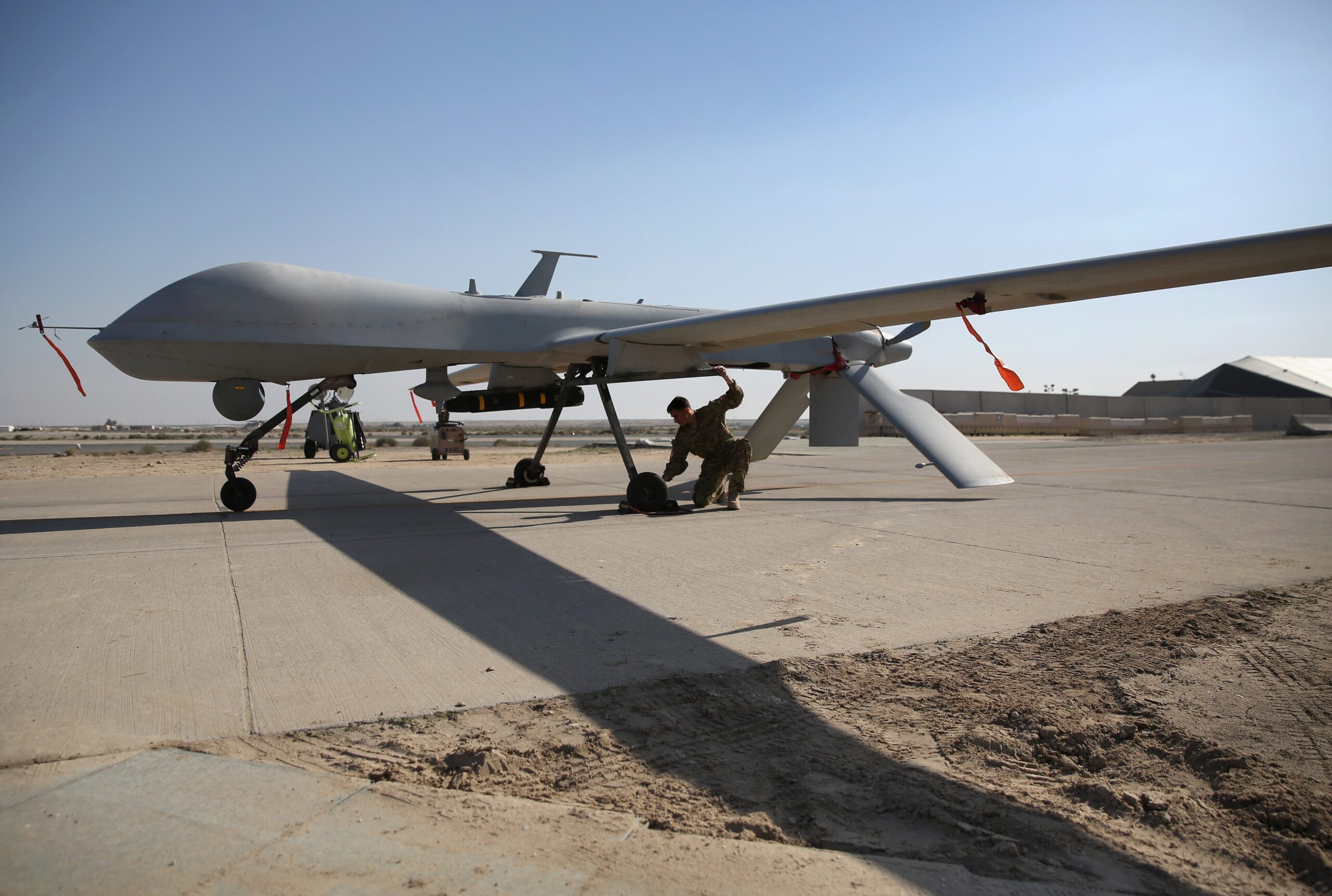
The latest session of the High-Level Meeting on Lethal Autonomous Weapons Systems (LAWS) in Geneva ended without a breakthrough. While representatives from over 50 nations, including key military powers and humanitarian organizations, gathered to address the ethical and legal implications of “killer robots,” they ultimately retreated to a compromise: agreeing merely to explore future options rather than committing to immediate legislation.
The urgency for this regulatory framework was underscored by the International Committee of the Red Cross (ICRC), which served as the guardian of the Geneva Conventions. Prior to the negotiations, the ICRC declared it “urgent” that legally binding rules be drafted within a year. This call was amplified by high-profile endorsements from UN Secretary-General António Guterres and Pope Leo XIII, who argued that humanity must not cede life-and-death decisions entirely to algorithms.
Despite this broad moral consensus, the technical and legal definitions of “autonomy” proved insurmountable obstacles. The core disagreement centered on where the line is drawn between a machine that assists a human operator (semi-autonomous) and one that selects and engages targets independently (fully autonomous). Without a universally accepted definition, drafting binding rules became an exercise in semantic ambiguity. Consequently, countries left the meetings having agreed only to “start discussing options,” effectively pushing the critical decision-making process into indefinite limbo.
Technical Analysis & Competitive Landscape
The failure to agree on rules is not merely a diplomatic squabble; it reflects deep fractures in how leading nations perceive and architect their military AI. The competitive landscape of LAWS is dominated by three primary architectural philosophies: the Human-in-the-Loop (HITL), Human-on-the-Loop, and Human-out-of-the-Loop.
The HITL Model: In this architecture, a human operator retains final authorization for every engagement. This is the current standard for most drone swarms used by NATO allies, where AI handles target recognition but humans confirm strikes. Proponents argue this preserves accountability and aligns with existing laws of war.
The Human-on-the-Loop Model: Here, a human can intervene to stop an attack but does not need to initiate it. This model is favored by agile tech startups and some defense contractors who believe that reaction times in modern warfare (often measured in milliseconds) exceed human cognitive limits.
The Human-out-of-the-Loop Model: This represents the “killer robot” extreme, where AI selects and engages targets without real-time human intervention. Nations like China and Russia have been vocal proponents of this model, arguing that fully autonomous systems can process vast amounts of sensor data faster than any human, providing a decisive tactical advantage.
The technical challenge lies in explainability. Modern deep learning models used for target recognition are often “black boxes,” making it difficult to explain why an AI decided a specific object was a threat. In international law, the principle of distinction (distinguishing combatants from civilians) and proportionality require clear intent and understanding. If an autonomous system commits a war crime due to a training data error or sensor glitch, determining liability becomes legally complex: is it the software developer, the military commander who deployed it, or the state itself?
Competitively, the US and its allies are currently leading in the HITL space but face pressure from China’s rapid advancements in fully autonomous swarm technologies. The failure to agree on rules allows these powers to continue developing their preferred architectures without a standardized global constraint, potentially leading to an arms race where the side with the most advanced AI gains disproportionate battlefield dominance.
Industry & Strategic Implications
The indefinite delay in regulating LAWS has profound implications for enterprise IT, defense contractors, and investors. For the defense industry, this uncertainty creates a “gold rush” environment where companies can rapidly scale up R&D budgets without fear of immediate regulatory caps. Major players like Northrop Grumman, Lockheed Martin, and emerging AI startups are likely to accelerate deployment schedules, betting that by the time regulations materialize, their systems will be operationally entrenched.
For enterprise IT, the lessons from LAWS negotiations mirror current debates in autonomous logistics and customer service bots. Just as a “killer robot” might misidentify a civilian, an enterprise AI might make a costly error in supply chain management or financial trading if not properly governed. The Geneva stalemate suggests that global governance for high-stakes AI will be slow, fragmented, and reactive rather than proactive.
From an investor perspective, the lack of clear rules introduces significant regulatory risk. While short-term profits may surge due to unregulated growth, long-term valuation could suffer if a future treaty imposes strict “human-in-the-loop” mandates that require expensive hardware upgrades or software rewrites for existing fleets. Investors must now assess companies not just on their AI capabilities but on their adaptability to potential future legal frameworks.
“The failure in Geneva is less about the technology itself and more about the speed of innovation outpacing the slow, consensus-based machinery of international law. We are entering an era where the battlefield may be decided by algorithms before diplomats can agree on who owns them.”
Final Outlook
The immediate future points toward a fragmented regulatory landscape. While Geneva failed to produce a binding treaty, it did not kill the idea; rather, it shifted the focus from a single global agreement to regional or bilateral accords. We may see the US and Europe developing their own “coalition of the willing” standards while China and Russia push for looser definitions that favor autonomy.
Technologically, we can expect the deployment of semi-autonomous systems to continue unabated, with full autonomy remaining a contested frontier. The industry will likely move toward hybrid architectures, where AI handles data processing but humans retain “final authority” in critical moments, serving as a political compromise between efficiency and accountability.
In the long term, the definition of warfare itself may evolve. If autonomous systems become indistinguishable from human operators due to speed and scale, the concept of “command responsibility” could be rewritten. The UN’s failure this week marks a pivotal moment: humanity has chosen to let technology define the rules of engagement rather than constraining it with law. As we move forward, the question is no longer if killer robots will exist, but how much control humans retain over them before they become truly independent actors in global conflict.



