
⚡ Executive Summary
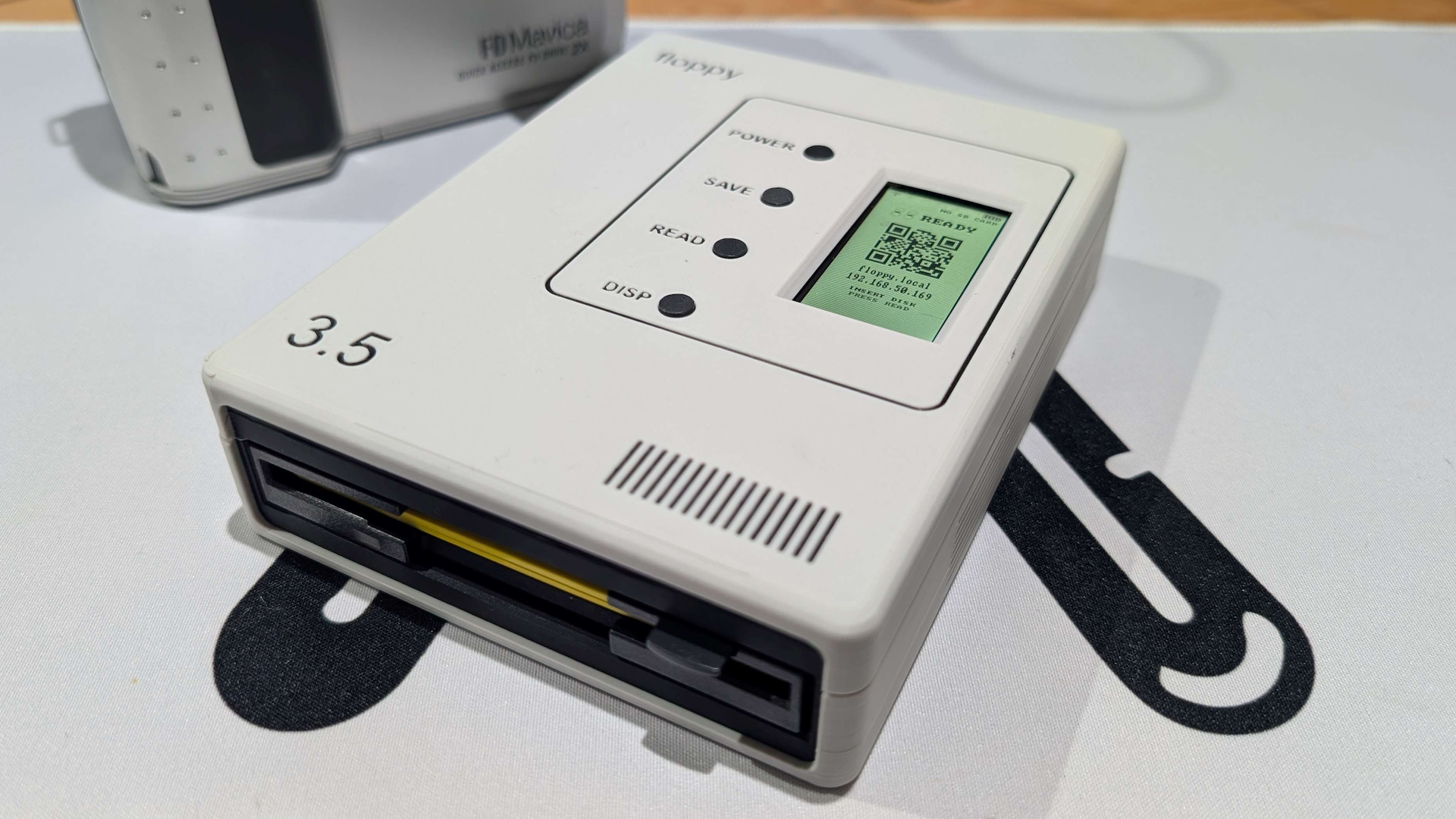
- Core News: An independent hardware engineer has successfully designed and built a portable, open-source Network Attached Storage (NAS) device specifically engineered to read 3.5-inch floppy disks over Wi-Fi.
- Key Metric/Data: The device utilizes an embedded Linux architecture with a custom controller board capable of interfacing directly with legacy IDE/PATA interfaces found in older digital cameras and standalone drives, bypassing the need for bulky PC hosts.
- Strategic Impact: This innovation addresses the critical ‘last mile’ problem of data migration from analog-to-digital transition eras, providing a low-cost, high-portability method to archive terabytes of fragmented legacy media without expensive enterprise hardware.
Developing News & Core Details
In the rapidly evolving landscape of data storage and retrieval, where modern SSDs dominate the market with speeds measured in gigabytes per second, a surprising resurgence of legacy technology has emerged. A dedicated hardware hacker has engineered a portable Wi-Fi NAS that serves as a bridge between the digital present and the floppy disk past. This device is not merely a retro-fitted curiosity; it is a functional piece of engineering designed to read 3.5-inch floppy disks directly over a wireless network, allowing users to transfer data from these aging storage mediums to modern computers seamlessly.
The core innovation lies in the device’s ability to act as an intermediary between the slow mechanical world of magnetic tape and the high-speed demands of contemporary computing. By integrating a compact form factor with Wi-Fi capabilities, this portable NAS eliminates the need for a traditional host computer running legacy drivers or software. Instead, it presents the floppy drive over a network interface, effectively turning any modern device—be it a laptop, desktop, or even a smart TV—into a client capable of accessing files stored on decades-old media.
The project leverages open-source hardware principles, allowing for transparency in design and potential community-driven iteration. The device likely employs an embedded system running Linux, chosen for its robust support of various file systems and network protocols. This setup enables the creation of a self-contained archival unit that can be plugged into a power source and connected to a local Wi-Fi network, ready to ingest data from digital cameras or external floppy drives instantly.
Technical Analysis & Competitive Landscape
From a technical standpoint, this portable NAS represents a sophisticated convergence of embedded systems engineering and legacy interface emulation. The primary challenge in building such a device is the disparity in I/O speeds between 3.5-inch floppy drives (typically 1.44MB capacity with transfer rates around 1-2 MB/s) and modern Wi-Fi standards (often exceeding hundreds of Mbps). To mitigate this latency, the hardware design likely incorporates a high-speed internal buffer or cache mechanism, allowing data to be read from the slow disk and temporarily stored before being transmitted over the network. This buffering strategy ensures that the perceived transfer speed is optimized for user experience.
Competitively, this device occupies a niche market that traditional enterprise NAS solutions often overlook due to cost and complexity. Commercial NAS units like those from Synology or QNAP are optimized for high-capacity HDDs and SSDs, with software stacks designed for modern file systems like ext4 or ZFS. Adapting these platforms to handle the quirks of floppy disk formatting (such as MBR partitioning or specific sector alignments) would require significant firmware customization. By building a custom, open-source solution, the hardware hacker bypasses vendor lock-in and creates a highly specialized tool tailored specifically for legacy media recovery.
The architecture also highlights the enduring relevance of IDE/PATA interfaces in embedded contexts. While SATA and NVMe have largely replaced parallel ATA in consumer electronics, many older digital cameras still utilize internal floppy drives or external USB-to-floppy adapters that rely on these legacy protocols. This portable NAS effectively modernizes the access layer for such devices, allowing them to function within a contemporary IoT (Internet of Things) ecosystem.
Industry & Strategic Implications
The broader implications of this development extend beyond mere convenience; it speaks to the urgent need for digital preservation in an era where hardware obsolescence threatens data loss. As millions of photos, documents, and creative works remain trapped on 3.5-inch floppy disks from the late 90s and early 2000s, the cost of migration has historically been prohibitive. This portable Wi-Fi NAS democratizes that process, offering a low-cost entry point for individuals, archivists, and small businesses to digitize their physical media without investing in expensive enterprise-grade retro-computing rigs.
Strategically, this device underscores the concept of ‘longevity engineering’—designing systems that can interface with hardware expected to remain relevant or accessible for decades. In an industry increasingly focused on ephemeral cloud storage and volatile flash memory, a solution that bridges the gap between mechanical reliability (floppy disks) and wireless connectivity offers a robust hybrid approach to data management.
Furthermore, the open-source nature of the project fosters a collaborative ecosystem where other developers can contribute drivers for different floppy controllers or optimize network protocols for low-bandwidth environments. This could lead to future iterations that support multiple legacy formats (e.g., Zip disks, Jaz drives) or integrate with cloud backup services automatically, creating a seamless pipeline from analog storage to the digital cloud.
“This portable Wi-Fi NAS exemplifies how open-source hardware can solve niche, high-value problems that commercial giants ignore, turning obsolete technology into a modern asset through clever architectural design.”
Final Outlook
Looking ahead, the success of this hardware hack suggests a growing trend toward modular and adaptable computing solutions. As legacy data continues to accumulate in corporate archives and personal collections, we can expect to see more specialized devices emerging that target specific storage formats with modern connectivity. The future may hold even more integrated systems where a single portable unit supports multiple generations of media—floppy disks, SD cards, and even early USB drives—all accessible via a unified Wi-Fi interface.
For investors and tech enthusiasts, this project signals the enduring value of embedded Linux in creating bespoke solutions for underserved markets. It also highlights the potential for ‘retro-modern’ hardware to become a profitable niche, where the combination of low component costs (used floppy drives) and high utility creates an attractive business model. As we move further into the age of AI and big data, the ability to efficiently ingest and process historical datasets from these early digital eras will only become more critical, making tools like this portable NAS not just a novelty, but a strategic asset in the broader data economy.



