
⚡ Executive Summary
- Core News: Tufa Labs has successfully compressed 1 gigabyte of raw Wikipedia text into a mere 105.39 megabytes using its proprietary tufazip tool, which relies exclusively on a self-learning AI transformer model as the predictor.
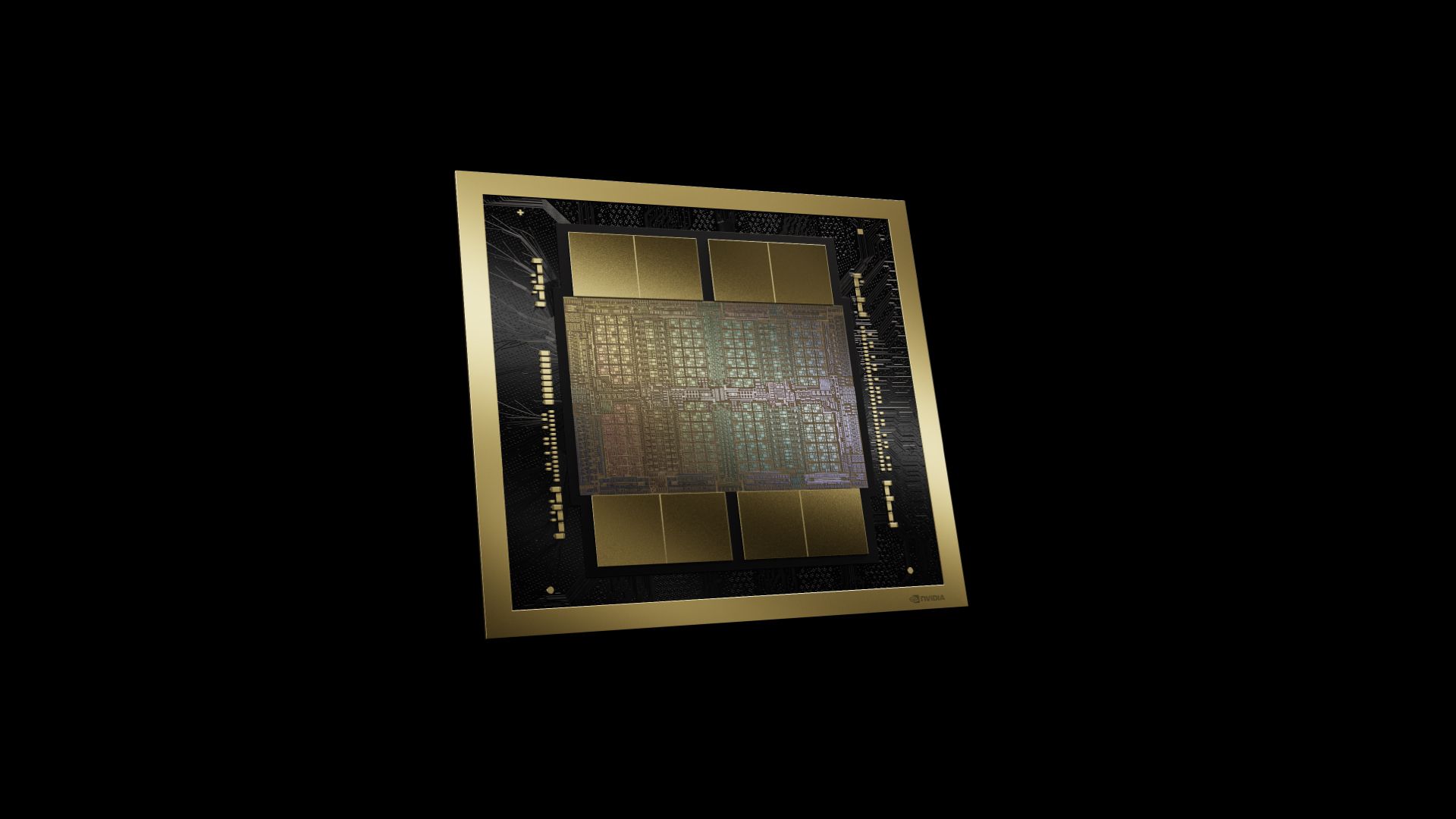
- Key Metric/Data: The compression ratio achieved is approximately 9:1 (roughly 10% of original size). This feat was executed on two Nvidia B200 GPUs, highlighting the immense computational power required for modern generative AI-based compression tasks.
- Strategic Impact: This breakthrough signals a transition from traditional dictionary-based or statistical algorithms (like DEFLATE) to neural network-driven compression. It suggests that future data storage and transmission could be optimized by models capable of learning semantic redundancy rather than just syntactic patterns, potentially revolutionizing cloud infrastructure costs.
Developing News & Core Details
In a significant development for the field of information theory and artificial intelligence, Tufa Labs has unveiled tufazip, a compression utility that defies conventional expectations. The system managed to reduce 1 gigabyte (GB) of uncompressed Wikipedia data down to 105.39 megabytes (MB). While this specific ratio—compressing the dataset to roughly 10.5% of its original size—is impressive, the true novelty lies in the architecture employed: a self-learning AI transformer model with approximately 163 million parameters.
Traditionally, data compression has relied on statistical methods that identify repetitive patterns (like DEFLATE used in ZIP files) or dictionary-based approaches. These methods treat text as a sequence of symbols without understanding meaning. Tufa Labs’ approach, however, treats the text as a semantic entity. By utilizing Nvidia B200 GPUs—some of the most powerful AI accelerators currently available—the model learned to predict the next token in a sentence not just based on immediate context, but by understanding the broader informational structure of the document.
The use of two B200s underscores the computational intensity of this task. Unlike traditional compression which is often CPU-bound and highly parallelizable at low levels, transformer-based compression requires massive matrix operations to process the high-dimensional latent space where the “meaning” of the text resides. The fact that a 163M-parameter model could achieve such results suggests an efficiency in parameter utilization that challenges current industry standards for Large Language Models (LLMs), which often require billions or trillions of parameters for similar tasks.
Technical Analysis & Competitive Landscape
The emergence of AI-driven compression represents a shift from “syntactic” to “semantic” compression. Traditional algorithms like LZ77, LZW, and DEFLATE excel at removing redundancy caused by repeated words or phrases (e.g., the word “the” appearing thousands of times). However, they struggle with semantic redundancy—where different words convey similar concepts (e.g., “car,” “automobile,” “vehicle”).
Tufa Labs’ transformer model addresses this by learning a compressed representation of the data’s meaning. When the AI reads a paragraph about “World War II,” it doesn’t just memorize the specific sequence of letters; it learns that any text describing a major 20th-century conflict with similar characteristics can be represented in a highly compact latent space. This is analogous to how image compression tools like JPEG work by converting images into frequency domains, but for text, this “frequency domain” is semantic.
Competitively, this positions Tufa Labs against established players in the AI infrastructure space, such as NVIDIA (which provides the hardware), Google (with its BERT-based compression research), and Microsoft (exploring transformer-based codecs). While Google’s early experiments with transformers for compression showed promise but often required massive models or specific training regimes, Tufa Labs’ ability to achieve a 9:1 ratio with a relatively modest 163M-parameter model suggests a breakthrough in architectural efficiency.
The hardware dependency is also a critical competitive factor. The reliance on Nvidia B200s indicates that this technology is currently at the bleeding edge of GPU performance, likely requiring high-bandwidth memory and specialized tensor cores to function efficiently. As these GPUs become more ubiquitous, the barrier to entry for AI compression will lower, potentially disrupting the market dominated by legacy software vendors who have optimized their tools for CPU-based processing.
Industry & Strategic Implications
The implications of this technology extend far beyond a simple file size reduction. For enterprise IT and cloud providers, data is often the single largest cost center. If AI-driven compression can reduce storage requirements by an order of magnitude without significant latency penalties during decompression, it could drastically lower OpEx for companies managing petabytes of unstructured text data (logs, documents, code repositories).
Furthermore, this technology has profound implications for bandwidth-constrained environments. In scenarios where transmitting large datasets over networks is expensive or slow—such as edge computing in remote locations or IoT devices with limited connectivity—a model that can compress and decompress semantic data efficiently could enable real-time AI inference on the edge.
From an investor’s perspective, this signals a maturation of the “AI for AI” market. Just as we built LLMs to process text, we are now building specialized models to optimize the very infrastructure that runs those LLMs. This creates a virtuous cycle: better compression allows for cheaper storage and faster transmission, which lowers the cost of running massive models, enabling even more complex models to be trained.
“The transition from statistical redundancy removal to semantic understanding in compression is not merely an incremental improvement; it is a fundamental redefinition of what data ‘is’—moving from a sequence of symbols to a dense representation of meaning. This suggests that the future of storage may not be about keeping more bits, but about keeping fewer, smarter representations.”
Final Outlook
As we look toward the next 12-24 months, we anticipate seeing AI-based compression move from experimental research environments into production-grade software. The initial hurdle will be latency; decompressing a file using a transformer model must be fast enough to not negate the storage savings. If Tufa Labs and similar innovators can optimize inference speed alongside compression ratios, we could see a new class of “smart archives” that adapt their compression levels based on how frequently data is accessed.
Future iterations may also integrate multimodal capabilities, where text, images, and audio are compressed together by understanding the relationships between them. For instance, compressing a technical manual alongside its diagrams could yield even higher savings if the model understands that the diagram explains the text. Ultimately, Tufa Labs’ achievement with tufazip marks the beginning of an era where data is not just stored, but understood and optimized at the most granular level possible.



